


 Español
Trees & Your Service


54%
of outages caused by storm-related
tree damage

10.4 million
trees managed by Central Hudson

1,800
miles of trees along overhead lines
trimmed each year
Trees are dynamic, living systems that must be managed proactively to prevent interference with power lines and other critical infrastructure.
Proper vegetation management supports public safety, protects property, and ensures dependable electric service.
That’s where Central Hudson plays a key role — working year-round to keep your lights on!
How We TrimHow we keep your lights on

Rather than relying only on a fixed trimming schedule, Central Hudson is using AI-informed predictive targeting to ensure we’re doing the right work at the right time. This approach uses machine learning, a technology that analyzes years of outage and vegetation data to recognize patterns and forecast higher-risk locations. By applying this insight at the device level, crews can focus work to where it is most likely to prevent future service interruptions.

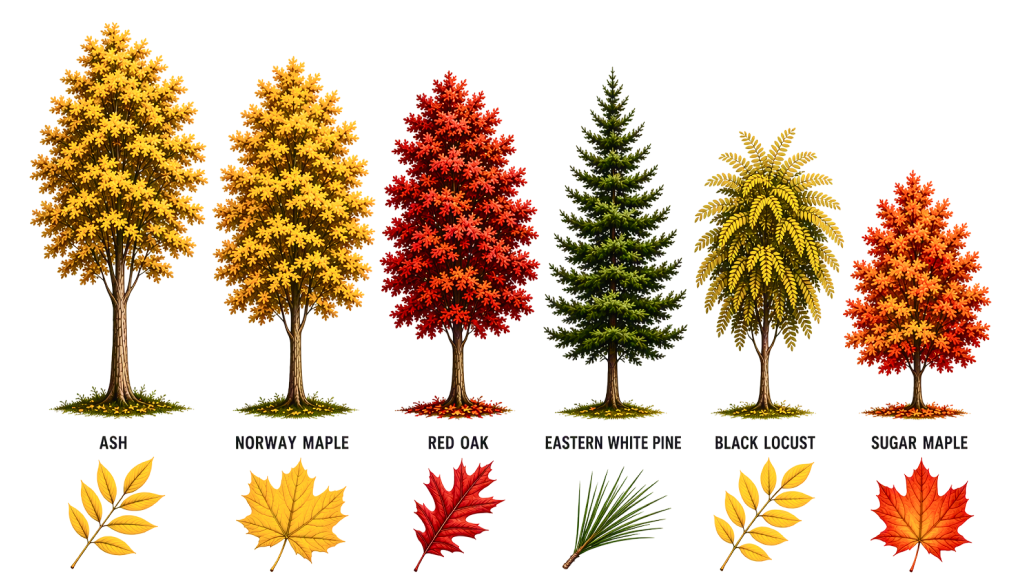
Outage data showed that 83% of vegetation-related outages could be traced to the six species pictured below. By combining species intelligence, such as tree identification, forest pathology, and seasonal risk patterns, Central Hudson can better target vegetation management across its service territory.

This more targeted approach is already showing results. In the second half of 2025, vegetation-related outages declined by roughly 40% compared with the five-year average during a relatively normal storm year. By focusing on a small portion of the system, Central Hudson is improving reliability more efficiently, addressing risk where it matters most before outages happen.
Rather than relying only on a fixed trimming schedule, Central Hudson is using AI-informed predictive targeting to ensure we’re doing the right work at the right time. This approach uses machine learning, a technology that analyzes years of outage and vegetation data to recognize patterns and forecast higher-risk locations. By applying this insight at the device level, crews can focus work to where it is most likely to prevent future service interruptions.
Outage data showed that 83% of vegetation-related outages could be traced to the six species pictured below. By combining species intelligence, such as tree identification, forest pathology, and seasonal risk patterns, Central Hudson can better target vegetation management across its service territory.
This more targeted approach is already showing results. In the second half of 2025, vegetation-related outages declined by roughly 40% compared with the five-year average during a relatively normal storm year. By focusing on a small portion of the system, Central Hudson is improving reliability more efficiently, addressing risk where it matters most before outages happen.
Some tree types that commonly cause outages:
We routinely inspect and clear vegetation along our 7,300 miles of electric distribution lines and follow trimming cycles to meet the reliability needs of our customers. We also conduct targeted work to remove limbs and trees that pose the greatest risk to electric service reliability.
Line clearance crews may visit properties to discuss the trimming or removal of hazard trees, including those that are dead, dying, or significantly leaning, that could threaten nearby power lines. In addition, Central Hudson ensures that our transmission corridors are cleared to the extent of our easement rights to protect the backbone of our grid.
These vegetation management programs play a critical role in enhancing the safety, reliability, and resilience of the electric system for all customers.
The property owner is responsible for clearing vegetation along the service line (the wire that connects to your home). For a fee, Central Hudson crews will disconnect and later reconnect service wires so that your contractor can safely trim or remove limbs or trees. To request more information or to request to schedule a temporary line disconnection, contact us or have your tree contractor make the arrangements.
During weather events, fallen trees and branches often need to be removed to restore electric service as quickly and safely as possible. In these situations, the responsibility for removing and disposing of the resulting tree debris typically rests with the property owner or the municipality where the work occurred.
Customers should contact their local highway or public works department to learn about any available debris removal services.
During Central Hudson’s routine line clearance maintenance activities on existing off-road rights-of-way, vegetation debris is generally left along the edge of the right-of-way. For work performed along roadways, brush is typically chipped, while larger wood and logs are left for the property owner to keep, use, or dispose of at their discretion.
Please note that Central Hudson does not remove all vegetation resulting from trimming or line clearance activities.
Please use this form to report trees or limbs that are in contact with primary electric wires (which are usually the top wires on utility poles located along streets and highways).
Please note that Central Hudson is not responsible for trimming limbs near telephone and cable television wires (usually grouped near the bottom), or service wires that attach to individual homes.
Some homes and businesses have a green utility box, typically about three feet square, that helps deliver electric service. For safety reasons, it is important to avoid planting trees or other vegetation too close to these boxes. They are connected to underground high-voltage electrical equipment, and utility crews need clear access to safely inspect, maintain, and repair them when necessary.
Tree roots can also grow into and interfere with underground electric facilities, potentially affecting service reliability. Shrubs are generally a better landscaping choice near these boxes, but before any planting begins, you must contact 811 to have underground utility lines marked. Once utility lines have been marked, shrubs may be planted at least two feet away from the marked facilities. To ensure safe access for utility crews, vegetation should also be kept at least three feet from the back and sides of the box and at least 10 feet from the front of the box.
Maintaining these clearances helps protect public safety, supports reliable electric service, and ensures crews can quickly access equipment during routine maintenance and emergency repairs.